Home News
Category:

News

Advertisement

The UK has a new prime minister—and just as the nation attempts to navigate its way out of a political storm, a hot mic has struck again. Andy Burnham, the former Mayor of Greater Manchester and newly installed head of government, made headlines not only for his maiden address outside Downing Street, but also due to a leaked conversation with reporters ahead of his audience with the King. The recording reveals what he was saying before the cameras were officially rolling and the polished PR kicked in.

According to media reports, in the off-the-record chat, Burnham stated bluntly that his top priority is to maintain ‘unwavering’ support for Ukraine while immediately establishing direct lines with key figures in Washington. Two names featured at the top of his call list: Donald Trump and Volodymyr Zelenskyy. One is the US President; the other, a leader whose ongoing backing from London comes against the backdrop of rising living costs and military commitments at home. On the surface, it looks like pragmatic diplomacy, but through the tabloid lens, the narrative is far punchier: a stray microphone picked up the very names that weren’t supposed to be dropped before the royal ceremony.

Pages: 1 2

Advertisement

The UK is officially entering an era of “generous figures and brutal terms.” From April 2026, state pensions and various benefits are being index-linked using multiple formulas, making the headlines look undeniably rosy: payouts are climbing by 3.8%, 4.8%, and even higher, while the Department for Work and Pensions (DWP) trumpets its “care for pensioners and families.” In truth, it is a classic carrot-and-stick maneuver: one hand extends a lump sum of extra cash, while the other subtly pushes you to stay in the workforce longer.

The new State Pension is rising to roughly £241.30 a week, the basic state pension to £184.90, giving many retirees an annual boost of around £575. Officials proudly boast about the triple lock—which allows pensions to outpace inflation—and openly admit that the inflation adjustment alone will cost an extra £11 billion in the 2026/27 financial year. Around £6 billion of this will go to pensions, £3 billion to working-age benefits, and another £2 billion to disability and carer payments.

Simultaneously, the government is bumping up an entire suite of social security payouts. Universal Credit for over-25s is increasing above inflation, with the standard weekly allowance rising from £91 to £98—potentially yielding an annual boost of roughly £775 by the end of the decade. Housing Benefit, Jobseeker’s Allowance, Pension Credit, and Child Disability Living Allowance are all being indexed at 3.8% or higher, feeding into the official narrative: “we are supporting the incomes of vulnerable groups.”

Pages: 1 2

Advertisement

Inflation is not just about rising prices at the supermarket checkout — it is also about the silent erosion of your savings. If your money is left sitting idle and the return on it falls short of inflation, you are not losing cash on paper, but in real terms, you can buy less and less with it. That is why more and more people are looking beyond simply where to hold their money and focusing on how to stop it evaporating before their eyes.

The most common mistake is keeping all your funds in one place without considering when you will actually need them. A portion of your money should be readily accessible for short-term needs, but long-term savings are far better placed where they can at least partially keep pace with inflation.

One of the simplest, standard options is to use high-yield savings accounts or flexible savings products that offer interest rates capable of keeping up with price rises. Another practical approach is fixed-term savings accounts, provided you are sure you will not need the cash in the immediate future. This route will not make you rich overnight, but it does help cushion the blow of inflation.

Pages: 1 2

Advertisement

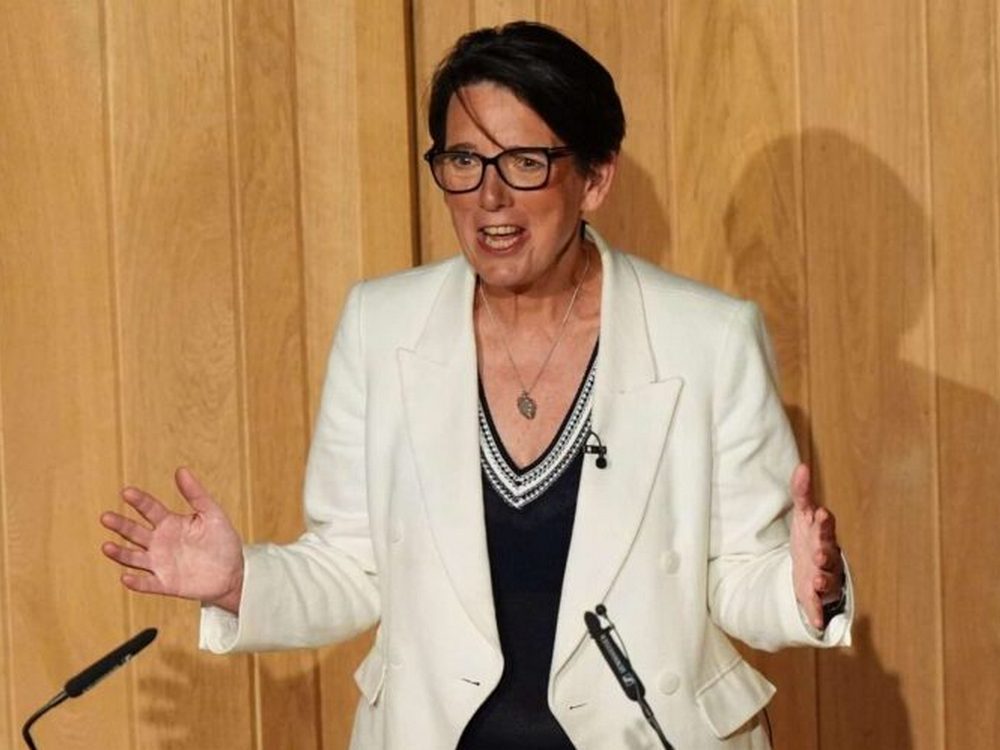
Andy Burnham took office with a bold message: Britain is tired of old politics, and people are fed up with empty promises. In his first major speech, he made it clear that he intends not merely to patch up the system, but to rebuild it virtually from scratch. The core idea is simple: the government must work for the people, not for political games.

The Prime Minister stated bluntly that the previous model “is not working well enough for ordinary people” — a statement that sounds like a sentence passed on the previous course in itself. Now, Burnham promises to focus on tangible issues: prices, housing, incomes, education, and the day-to-day services that Britons rely on.

One of the most notable points is handing over more powers to the regions. Put simply, London wants to stop micro-managing everything, giving local authorities more freedom and funding. In the PM’s vision, this should speed up decision-making and make the system more dynamic and accessible for people living outside the capital.

Pages: 1 2

Advertisement

In his first speech after taking office, the new UK Prime Minister Andy Burnham promised “the biggest changes in 40 years” and made it clear that he intends to dramatically shift the country’s political course. According to him, Britain has reached a “turning point”, and the previous model of governance no longer meets the needs of ordinary people.

Speaking outside Downing Street, Burnham stressed that British politics must become “more focused on cooperation and problem-solving, rather than scoring points.” The media immediately seized upon this statement, as the new head of government effectively signalled a break from the previous style of political combat, where loud arguments often overshadowed real solutions.

One of the central themes of the speech was decentralisation. Burnham stated that more powers must be handed over to the regions and local communities so they can take a more active role in growing the economy and resolving day-to-day issues themselves. He also promised to bring vital public services back under firmer public control and to use government procurement to support British industry.

Equally attention-grabbing was the Prime Minister’s promise to lay out a new 10-year national development plan later this year. In essence, he offered the British public not just a change of cabinet, but an attempt to rewrite the very logic of state governance — from the economy to social policy.

Pages: 1 2

Advertisement

The Bank of England has stated that the UK financial system faces mounting risks driven by artificial intelligence. At the heart of the watchdog’s concerns are potential market overheating, escalating cyber threats, and the increasingly opaque debt structures of AI firms.

In its half-yearly Financial Stability Report, the Bank noted that expectations surrounding future revenues from artificial intelligence remain highly uncertain. According to the regulator, it is currently impossible to predict with confidence how quickly AI will deliver tangible profits to businesses and the wider economy.

Of particular concern are the valuations of AI companies, which are looking increasingly stretched. Some of the tech sector’s biggest players have already seen their market values skyrocket amid the AI boom, leading to market concentration around a narrow group of firms. The Bank of England warns that this heightens the risk of a market bubble forming.

Another growing issue is the debt burden of AI-related companies. The regulator warned that these corporate structures are becoming more complex and opaque, while the rapid pace of investment into the sector has no historical precedent. Should conditions deteriorate, this could pile additional pressure onto financial markets.

Separately, the Bank of England highlighted the threat of cyberattacks. The report noted that advanced AI models are becoming powerful enough to launch larger-scale attacks. Consequently, risks to banks, investors, and critical infrastructure are rising significantly.

Pages: 1 2

Advertisement

Payments could be increased for people in the UK who have reached the age of 66 but have not yet begun receiving their full State Pension. The discussion was sparked by a new recommendation from MPs, who believe the current support system fails to account for the financial hardships faced by many older people.

The issue concerns those caught in a difficult transitional zone: individuals who are no longer considered young workers but have not yet reached full pension support. Against the backdrop of the rising cost of living and the increasing state pension age, it is this specific group that is increasingly left without a sufficient income.

The parliamentary Work and Pensions Committee has suggested exploring an increase in Universal Credit for 66-year-olds. According to MPs, such a measure could partially soften the blow for individuals who are unable to continue working due to poor health or a shortage of available jobs.

Pages: 1 2

Advertisement

BRITISH households sweating through this summer’s brutal third heatwave are being urged to claim a hidden Government cash payout that could hand them free air conditioning before the scorching 35C weather breaks the charts.

A staggering number of property owners are completely unaware that they are legally entitled to up to £2,500 under the upgraded Boiler Upgrade Scheme. If you haven’t claimed yours yet, you are quite literally missing out on free money that your neighbours might already be using to stay cool.

Don’t Miss Out: The £2,500 Cash You Are Entitled To

The Government funding is explicitly designed for every eligible property owner across England and Wales. It covers state-of-the-art air-to-air heat pumps. While they sound technical, these clever devices double up as high-spec cooling units during the sweltering summer months and hyper-efficient heaters in the winter.

With typical air conditioning installation costs sitting at around £1,900 according to Checkatrade, this £2,500 Government grant doesn’t just discount the upgrade — it could completely wipe out the entire bill, leaving you with a fully installed cooling system at absolutely zero cost to you.

Pages: 1 2

Advertisement

The smartphone has transformed the public from a passive audience into a roaming press corps, capable of documenting history with a tap of a red button. This phenomenon, widely termed citizen reporting, has shattered the monopoly of institutional media over the visual record. The most iconic and harrowing footage of the modern era often originates not from a professional’s shoulder-mounted camera, but from the unsteady hand of a bystander who happened to be in the wrong place at the right time. This shift has been a profound equaliser, but it simultaneously introduces a crisis of verification that plagues the modern information ecosystem.

The power of the citizen reporter lies in the raw authenticity of their gaze. They are free from editorial bias, branding constraints, and the often-suffocating politeness of diplomatic reporting. They film what they see, often at great personal risk, providing an unfiltered primary source that can circumvent state censorship and institutional denial. This footage becomes the bedrock of legal evidence in international courts and the catalyst for social movements. It is a democratic art form, accessible to anyone with a device, and it has given voice to the marginalised corners of the world that satellite trucks cannot reach or will not visit.

Yet, the very attribute that makes the citizen reporter valuable—their total absence of institutional scaffolding—is also the source of immense vulnerability. A professional camera operator in a war zone works within a framework of safety protocols and a chain of editorial command. The citizen journalist, often alone and terrified, streams their reality directly into a hostile void. Without a legal department, a security advisor, or a psychologist, they are extraordinarily exposed to physical danger, digital surveillance, and the psychological aftermath of capturing trauma. The media ecosystem lauds their contribution while often failing to provide the structural protection they desperately need.

Pages: 1 2

Advertisement

The twenty-four-hour news cycle, once a novel concept confined to a handful of cable networks, has now leaked into the very fabric of daily consciousness via portable screens. It operates not as a window to the world, but as an intravenous drip of crisis, delivering micro-doses of anxiety directly into the bloodstream with every vibration of a phone. The mental toll of this unceasing exposure is not easily categorised as a clinical diagnosis, yet it manifests as a pervasive societal condition—a background hum of dread that drains the cognitive and emotional reserves necessary for grounded, local living.

The human brain is not wired to process the entirety of the planet’s misfortunes in a single breakfast sitting. We evolved with a stimulus-response mechanism designed for the threats within our immediate savannah, not for the aggregated horrors of distant wars, fluctuating markets, and political scandals. When we are perpetually exposed to a narrative of collapse, the amygdala—the brain’s fear centre—remains in a state of low-grade activation. This chronic hyper-vigilance blunts our reaction to genuine local dangers while leaving us jittery and reactive to abstract, uncontrollable global forces, breeding a sense of helplessness that is as exhausting as it is unproductive.

This emotional exhaustion manifests socially as a phenomenon often described as headline stress or compassion fatigue. We become efficient at scrolling past a humanitarian disaster to get to a funny video, not out of malice, but out of a psychic necessity to self-regulate. The guilt that follows this self-protective scroll creates a secondary layer of shame. We are trapped in a bipolar switch between a state of manic urgency—‘I must share this to save the world’—and a numb dissociative state where nothing breaks through the wall of protection. Neither state is conducive to meaningful, sustained civic engagement.

Pages: 1 2

Advertisement

Newer Posts
logo-white

Contact information

Disclaimer

The information provided on this blog is for general informational and entertainment purposes only. All content reflects personal opinions and experiences and should not be considered professional, legal, financial, medical, or other specialized advice. While efforts are made to keep the information accurate and up to date, no guarantees are made regarding completeness, reliability, or accuracy.

All rights reserved © 2026