Home Business
Category:

Business

Advertisement

The boardrooms of the last decade were awash with the intoxicating language of digital transformation, a promise that a cocktail of cloud computing, big data, and artificial intelligence would render old-world competitors obsolete. As the dust settles on the initial gold rush, a more sober realism is taking hold. Digital transformation is not a destination or a project with an end date; it is a permanent, often gruelling, state of organisational evolution that fails more often than it succeeds. Stripping away the hype reveals that the core challenge is not technological but deeply cultural, a battle against institutional inertia and the immune system of legacy thinking.

The graveyard of transformation is populated by companies that mistook modernization for digitization. Putting a cosmetic mobile application on top of a broken, manual back-end process is like building a glass tower on a swamp. True transformation demands the painful, unglamorous work of re-architecting the core infrastructure—the supply chain logic, the data models, the invoicing systems—that has calcified over decades. This is a multi-year, high-risk plumbing job. Staffed by engineers who speak a language the board does not understand and led by executives who demand quarterly returns, the transformation initiative becomes a political battleground between the tyranny of the immediate quarterly result and the long-horizon investment.

The human element is the perennial bottleneck. Digital transformation is fundamentally a change management exercise. It requires a workforce to abandon expertise that provided status and job security for decades, replacing it with a raw, anxious state of learning. Resistance is rarely explicit rebellion; it is the passive-aggressive compliance of a salesperson who continues to use a private spreadsheet because the new CRM tool is ‘slow.’ The failure to win the hearts and habits of the middle management layer is the silent killer of these initiatives. Grand visions from the C-suite fail miserably when the daily operational flow refuses to bend to the new digital pipeline.

Pages: 1 2

Advertisement

The individual who pushes a shopping trolley is no longer a passive receptacle for advertising; they are an increasingly political actor, armed with a smartphone that can scan a barcode and instantly reveal the skeleton in a brand’s closet. The rise of the conscious consumer marks a tectonic shift in the balance of power between the register and the boardroom. Purchases are being re-coded as moral endorsements, and the act of boycotting—or ‘buycotting’—has become a primary channel of civic participation for a populace disillusioned with traditional political efficacy. This evolution forces a radical transparency on business, even as it raises questions about the accessibility and sincerity of ethical consumption.

The driving engine of this consciousness is information symmetry. For decades, the corporation held all the cards concerning its supply chain’s behaviour. Today, satellite imagery can track deforestation, blockchain experiments can verify the organic status of a bag of coffee, and a teenager with a TikTok account can bring a billion-dollar brand to its knees by exposing labour abuses. The veil has been torn. The consumer operates in a world of real-time ratings, applications that score products on political donations, carbon footprint, and animal welfare. The shopping trip has become an interactive forensic audit, and the shelf is an electoral ballot that is cast three times a day.

This scrutiny has given rise to a new segmentation in marketing: the ‘Lifestyle of Health and Sustainability’ cohort. These consumers do not just buy a product; they buy a narrative of alignment with their identity. They seek out B-Corporations, regenerative agriculture labels, and cruelty-free certifications. The willingness to pay a premium for this narrative has reshaped entire categories, from plant-based proteins taking market share from dairy to electric vehicles disrupting the automotive hierarchy. The market is responding to the demand signal with astonishing speed, proving that when the consumer’s conscience shifts, the research and development pipeline of capitalism flips instantly to match it.

Pages: 1 2

Advertisement

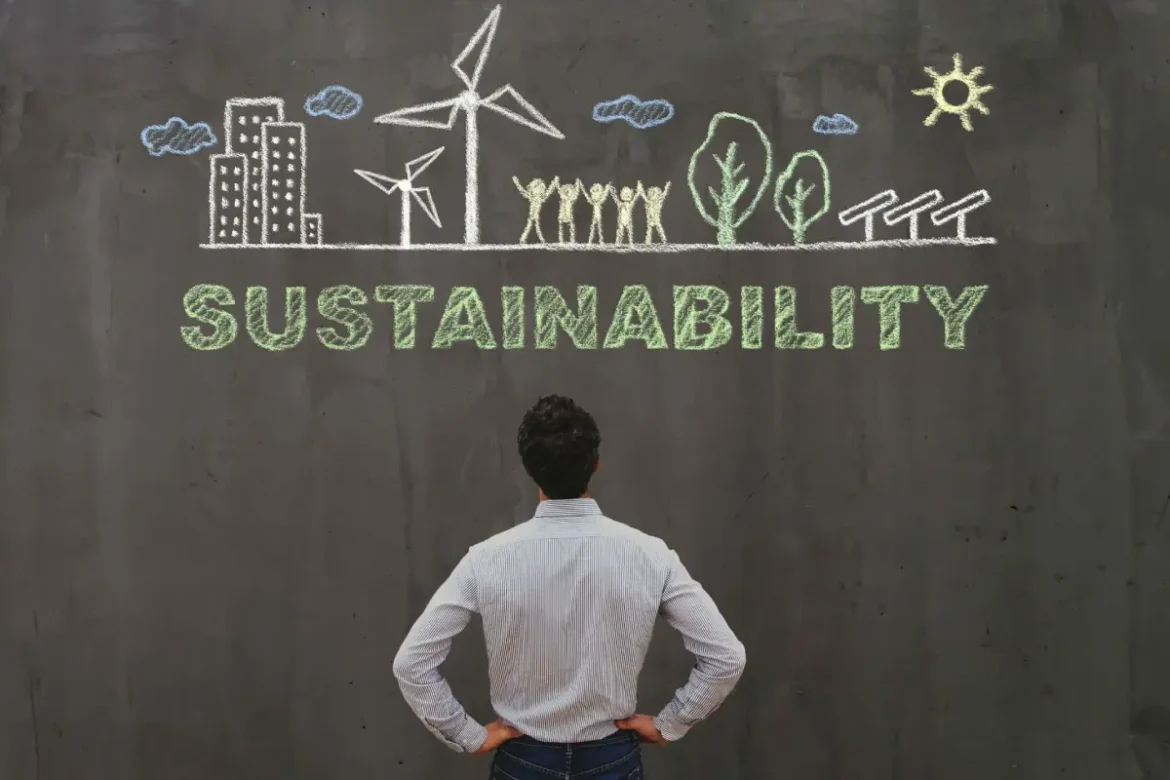
Sustainability has morphed from a public relations annex, tucked into the final pages of an annual report, into a central nervous system dictating corporate survival. It is no longer a question of ethical preference but a hard-nosed business imperative driven by regulatory pressure, material resource scarcity, and a radical shift in capital allocation. The companies that continue to treat environmental and social governance as a checkbox are discovering that the check is being cashed by reality, and the funds are insufficient. The new imperative is a total rewiring of the value chain, a challenge that is as much about engineering and logistics as it is about philosophy.

The driver of this shift is not purely altruism; it is the cold logic of materiality. Climate volatility is no longer a future forecast but a present disruption to supply chains. Droughts choke the waterways that transport raw materials, floods submerge factories just days before product launches, and extreme heat reduces agricultural yields essential for consumer goods. Corporations are discovering that they are deeply vulnerable to a destabilized biosphere. Sustainability, therefore, is a defence mechanism. It is the process of becoming resilient to the physical shocks that a conventional, extractive business model has amplified.

Capital has become the enforcer. The rise of environmental, social, and governance (ESG) -focused investment vehicles has redirected vast sums of money away from carbon-heavy legacy industries. A company seeking to float on the market or secure debt financing now faces forensic scrutiny of its Scope 3 emissions—those embedded in its entire supply ecosystem. A poor sustainability rating is no longer just a media scandal; it hikes the cost of capital, restricts access to insurance, and blocks entry to the most lucrative public procurement contracts. The fiduciary duty of a board now explicitly includes the navigation of planetary boundaries, a reality that would have been considered radical just fifteen years ago.

Pages: 1 2

Advertisement

The gig economy arrived with the seductive rhetoric of liberation: be your own boss, set your own hours, monetise your spare time. A decade into the maturation of this model, the sheen has largely worn thin. The double-edged nature of this labour shift is now painfully visible, carving deep into the social contract. While the model offers a genuine on-ramp for supplemental income and a lifeline of flexibility for those who cannot fit into rigid nine-to-five structures, it simultaneously dismantles a century of invisible scaffolding that protects workers from precarity.

The sharpest edge of the gig structure is the massive risk transfer from the institution to the individual. In a traditional employment model, the corporation absorbs the overhead of idle time, the cost of benefits, the depreciation of the tool, and the insurance of liability. The gig model, by classifying the worker as an independent partner, offloads all of this directly onto the worker’s back. The driver brings the car, absorbs the fuel fluctuation, pays for the insurance, and sits unpaid between rides. The corporation provides the software and the market access. This is not a partnership of equals; it is an asymmetric arrangement where the capital risk is atomized and distributed to those least able to weather a dry spell.

The flexibility preached by these platforms is often a mirage dictated by algorithmic coercion. The worker is theoretically free to log off, but the system is designed to nudge, punish, and prod them into staying glued to the app. Surge pricing dangles a carrot that often vanishes the moment the driver relocates to a busy zone. Reputation scores, maintained by a customer base that can be punitive for reasons unrelated to the core service, become a sword of Damocles. An algorithmically managed workforce does not need a human manager to bark orders; the system simply reduces the flow of earning opportunities, a silent disciplinary measure that is far more insidious and difficult to appeal than a human reprimand.

Pages: 1 2

Advertisement

A few years removed from the forced global experiment in remote labour, it has become clear that the shift was never a binary choice between the office and the kitchen table. The revolution, now entering its mature phase, is not about the death of the headquarters but about a fundamental reconfiguration of what a ‘place of business’ actually means. We have moved beyond the euphoric discovery that video calls work and into the thorny, nuanced territory of asynchronous collaboration, cultural decay, and the real estate implications of a distributed workforce. The revolution did not end with everyone staying home; it evolved into a hybrid complexity that few leaders were trained to manage.

The early promises of remote work centred on productivity spikes. Without the distraction of the open-plan office, deep work flourished. However, as time passed, the cost of this isolated productivity began to surface in the metrics of innovation and cohesion. The loss of ‘weak ties’—the casual encounters by the coffee machine that spark serendipitous ideas—proved to be a harder deficit to solve than a bandwidth issue. Organisations discovered that scheduling a Zoom call to discuss a problem is not the same as leaning over a desk with a sketchpad. The formalization of all communication via calendars has squeezed the breathing room out of creativity, replacing messy collaboration with a sterile, back-to-back chain of agenda-driven meetings.

The psychological contract between employer and employee has been irrevocably re-drafted. Workers who have tasted the autonomy of controlling their physical environment and scrambling their work-life integration are deeply resistant to a full return command. This has created a schism in the labour market: the command-and-control firms demanding a full seat-time presence are bleeding talent to the output-focused firms that have embraced flexibility. The office is no longer a neutral default; it has become a positional statement on trust. To demand a return is now, fairly or not, often interpreted as a lack of trust in the professional integrity of the workforce, and this perception is a talent repellent.

Pages: 1 2

Advertisement

logo-white

Contact information

Disclaimer

The information provided on this blog is for general informational and entertainment purposes only. All content reflects personal opinions and experiences and should not be considered professional, legal, financial, medical, or other specialized advice. While efforts are made to keep the information accurate and up to date, no guarantees are made regarding completeness, reliability, or accuracy.

All rights reserved © 2026