Home Politics
Category:

Politics

Advertisement

Sitting quietly behind the thunder of the daily news cycle, a network of research institutions and advocacy tanks churns out the intellectual ammunition that frames our collective reality. The influence of think tanks on public opinion is a subtle, osmotic process that shapes not what we think, but the narrow boundaries of what we are allowed to think about. These organisations function as the baton passers between abstract academic theory and the soundbite political culture, converting the long-term interests of their funders into articulate, media-friendly reports that grant a patina of objectivity to naked ideology. They are the dark matter of the policy universe, invisible but gravitationally decisive.

The mechanism of influence is the strategic manufacturing of a consensus. When a complex social issue emerges—inequality, a health emergency, a trade dispute—the media requires an immediate, clipped, authoritative quote to balance the story. The think tank is ready. A senior fellow, polished and unflappable, appears on the broadcast, offering a study that frames the crisis as one of individual responsibility rather than a structural flaw. By providing the media with a constant stream of ready-made, quotable content, the think tank bypasses the laborious peer-review of academia to project a message directly into the living room. The success of a report is measured not in citations but in column inches and prime-time minutes.

The financial architecture underpinning this influence is a web of opacity. While labelled as non-partisan research bodies, many rely on the donations of corporations, foreign governments, and ultra-wealthy individuals with a distinct legislative agenda. This funding does not typically result in a crude, traceable bribe to alter a specific sentence—though it can. Instead, it shapes the climate of the institution. A scholar who knows the survival of their six-figure salary depends on a grant from a specific industrial sector will unconsciously, or consciously, filter their research questions. The most insidious form of censorship is not the suppression of a finished paper, but the funding culture that ensures certain damaging papers are never proposed in the first place.

Pages: 1 2

Advertisement

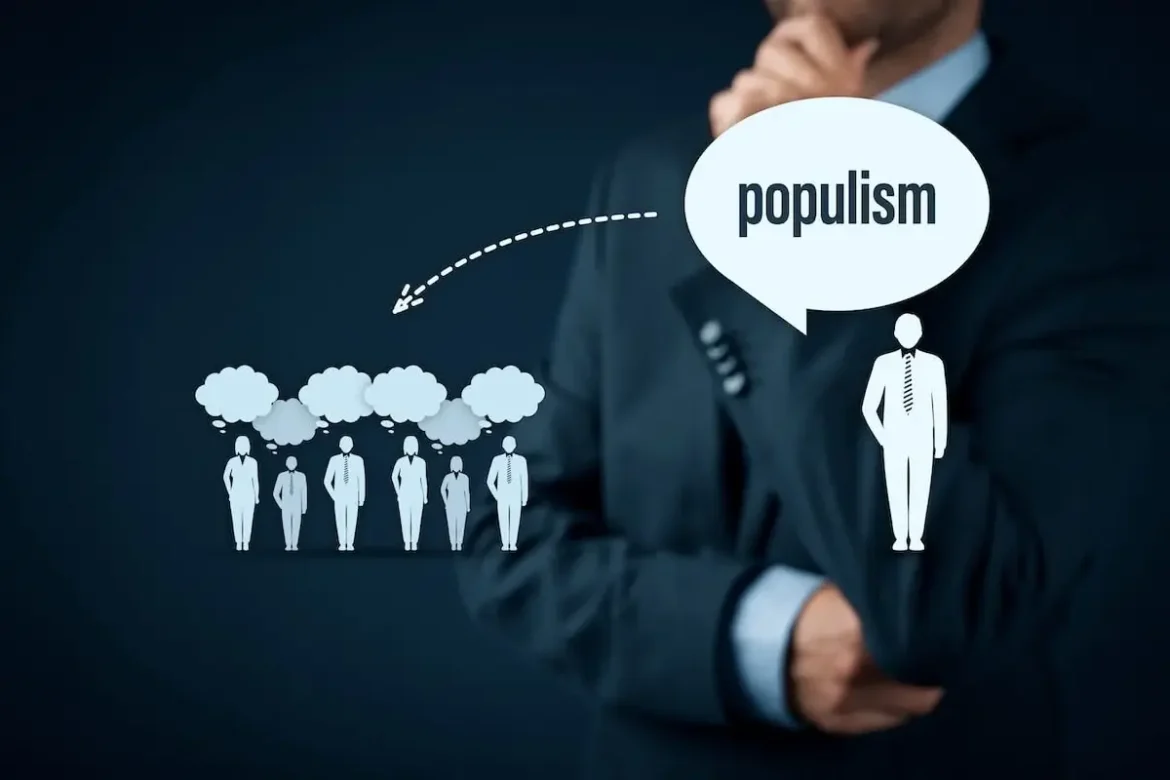
Populism operates as a permanent, low-grade fever in the body of democracy, flaring up when the liberal institutions of a society fail to manage the anxieties of rapid change. It is a political logic that frames all society as an irreconcilable struggle between a pure, unified ‘people’ and a corrupt, conspiratorial ‘elite.’ The discontent it breeds—and feeds on—is not simply a matter of economic grievance but a deeper, existential crisis of recognition. The attraction of the populist leader lies not in the detailed policy papers they do not possess, but in the performance of transgression, the promise to break the rules of a game that is perceived as rigged.

The economic engine of this discontent is often the geography of modernity. The unfettered flows of capital and labour have created thriving, highly educated, cosmopolitan hubs that pull wealth and brainpower away from the periphery. The populist moment is what happens when the neglected provinces decide to speak back. While the elite celebrates the fluidity of a borderless world, the left-behind experience it as a loss of sovereignty and dignity. Populism is a scream against the abstraction of globalisation, a demand to re-bundle the complex threads of a modern economy back into a simple, protected national container, even if such a re-bundling is technically impossible.

The populist’s weapon is the simplification of language. They bypass the complex grammar of institutional politics—the committees, the judicial reviews, the multilateral treaties—and speak directly to the gut. They promise that a single, simple act of will can restore a lost glory. This is deeply attractive to a citizenry exhausted by the cognitive load of a hyper-connected world. The liberal politician asks the voter to process a 300-page white paper on regulatory reform; the populist asks the voter to look at a wall. This asymmetry in the supply of simplicity is a tactical advantage that the defenders of liberalism have never fully solved, often coming across as lecturers while their opponents lead a revival meeting.

Pages: 1 2

Advertisement

Buried deep within the arteries of government, far from the drama of the debating chamber, an ecosystem of influence operates that systematically shapes the text of the laws that govern daily life. The role of lobbying in policy making is a constant, corrosive tension between the legitimate function of expertise and the illegitimate purchase of access. While it is enshrined in democratic principle that a citizen has the right to petition their government, the professionalised, multi-billion-pound industry of modern lobbying has warped that right into an asymmetrical arms race where the wealthiest, most concentrated interests enjoy a volume of speech that drowns out the diffuse public interest.

The technical complexity of modern governance is the lobbyist’s foot in the door. A legislator cannot possibly be an expert on synthetic biology, digital taxation, and aviation fuel standards simultaneously. They are generalists in a crisis of time, running from a committee to a fundraiser. The lobbyist, representing a sector, arrives with a perfectly drafted amendment, a white paper, and a specific clause designed to be copied and pasted into a bill. This is portrayed as a public service, and often, on the surface, it is helpful. But the information is never neutral. The analysis of an economic impact is built on assumptions that protect the incumbent, the regulatory burden is painted as apocalyptic for the domestic industry, and the alternative path—which might be better for the consumer or the environment—is conveniently erased from the memo.

The revolving door between the regulator and the regulated solidifies this advantage. Individuals move seamlessly between senior roles in government ministries and high-paid consultancy positions in the very industries they were recently tasked with overseeing. This migration creates a deep, human-level cultural capture. The civil servant drafting a regulation knows that in eighteen months they might be applying for a job with the company they are currently policing. This is not necessarily a matter of explicit quid pro quo corruption; it is a more subtle atmospheric pressure. The regulator begins to see the world through the industry’s lens, valuing ‘market-led solutions’ and ‘light-touch oversight’ not because of an evidence base, but because of a career path.

Pages: 1 2

Advertisement

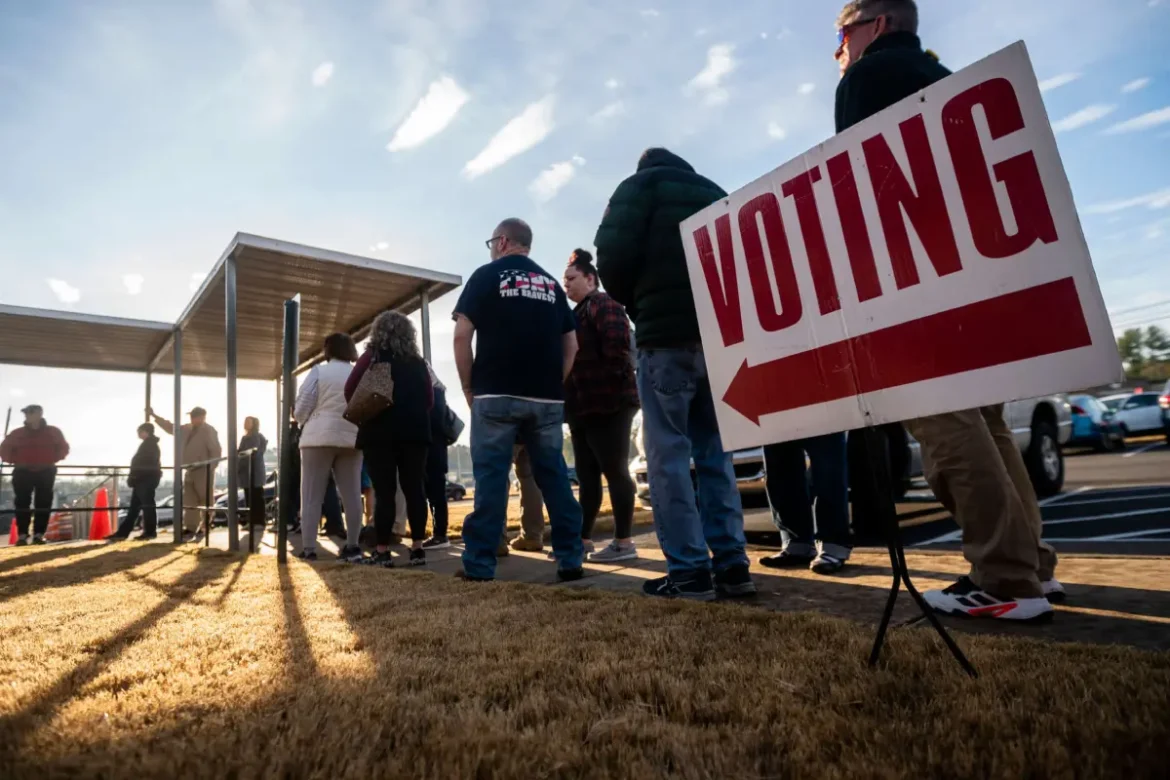
The most insidious threat to electoral politics is not the dramatic explosion of a coup or a riot, but the slow, quiet exhale of a citizen who decides not to bother. Voter apathy, often mistaken for contentment or laziness, is a profound systemic failure that hollows out the legitimacy of representative government. In developed democracies, the steady decline in turnout—especially in local and supranational elections—signals a deep disconnect between the governing class and the governed. The citizen is not apathetic by nature; apathy is a learned response, a rational withdrawal from a political marketplace that offers goods of diminishing quality.

The first cause of this withdrawal is a perception of inefficacy. The individual voter looks at the massive, complex, globalised forces shaping their life—the transnational supply chain, the unregulated algorithm, the climate currents—and correctly observes that the local candidate on the ballot has almost no levers to pull against them. The promises made in a manifesto are rendered hollow within a week of taking office, either by economic reality or by the whip of party discipline. When the act of voting produces no perceptible change in the trajectory of one’s daily life, the rational individual begins to de-invest emotional energy from the ritual. Abstention is not a failure of duty; it is a cynical but accurate market assessment that the product is broken.

The modern campaign has also become a poor return on attention. A citizen is required to engage with a brutal, months-long deluge of negative advertising, disinformation, and inane social media bickering to extract a few grams of actual policy. The process demands that the voter sift through a landfill of false equivalencies and personal jabs to find something resembling a plan. The emotional cost of this sifting—the anxiety, the disgust, the contamination of one’s social feeds—is high, while the utility of the final choice seems marginal at best. Faced with a marathon of psychological abuse, large swathes of the population sensibly choose to switch off the television and go for a walk. This is apathy as self-care.

Pages: 1 2

Advertisement

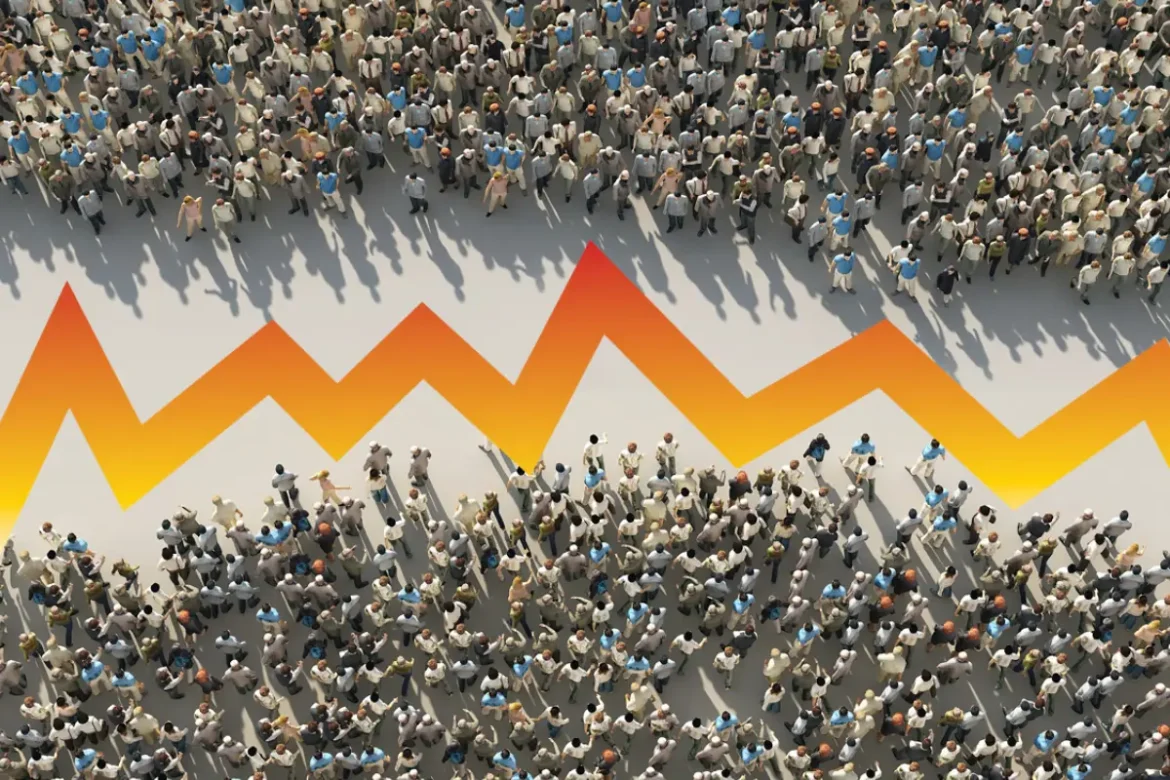
The grand, unifying public square where a society once debated its direction has shattered into a thousand digital rooms, each echoing with its own distinct cadence and fundamental assumptions. The fragmentation of political discourse is perhaps the defining challenge of the democratic process in this century. It is a phenomenon driven not merely by technology, but by the collapse of the shared epistemic foundation—the common set of facts, media sources, and authoritative voices—that allowed a liberal democracy to argue productively. We are now a constellation of parallel publics, speaking different languages and operating under different physics, yet forced to share a single, geographically bound state.

The driver of this fragmentation is the algorithmic curation of reality. The personalisation of the scroll has created an information environment where a voter in one postal code can go months without seeing a news story that challenges their preferred worldview. The algorithm is a profit-optimized servant; it delivers what keeps the user engaged, which is usually outrage and affirmation. This dynamic starves the centre ground of oxygen. The space for a nuanced, ‘it depends’ argument is algorithmically useless because it triggers less emotional reaction than a hyperbolic, absolutist pronouncement. The engineering of the platform, therefore, actively selects for political division.

This retreat into identity-based information bubbles corrodes the concept of a loyal opposition. Political rivalry changes from a clash of ideologies on a shared field into a conflict of existential tribes. The other side stops being a fellow citizen with a differing view and becomes an existential threat to the nation’s survival, a group of dangerous, deluded, or malicious actors. When an opponent is dehumanized into a carrier of a plague rather than a holder of a mistaken policy, the tools of democratic compromise—bargaining, conceding, logrolling—become impossible. Bargaining with evil is a sin; defeating it is a crusade. The system grinds to a halt.

Pages: 1 2

Advertisement