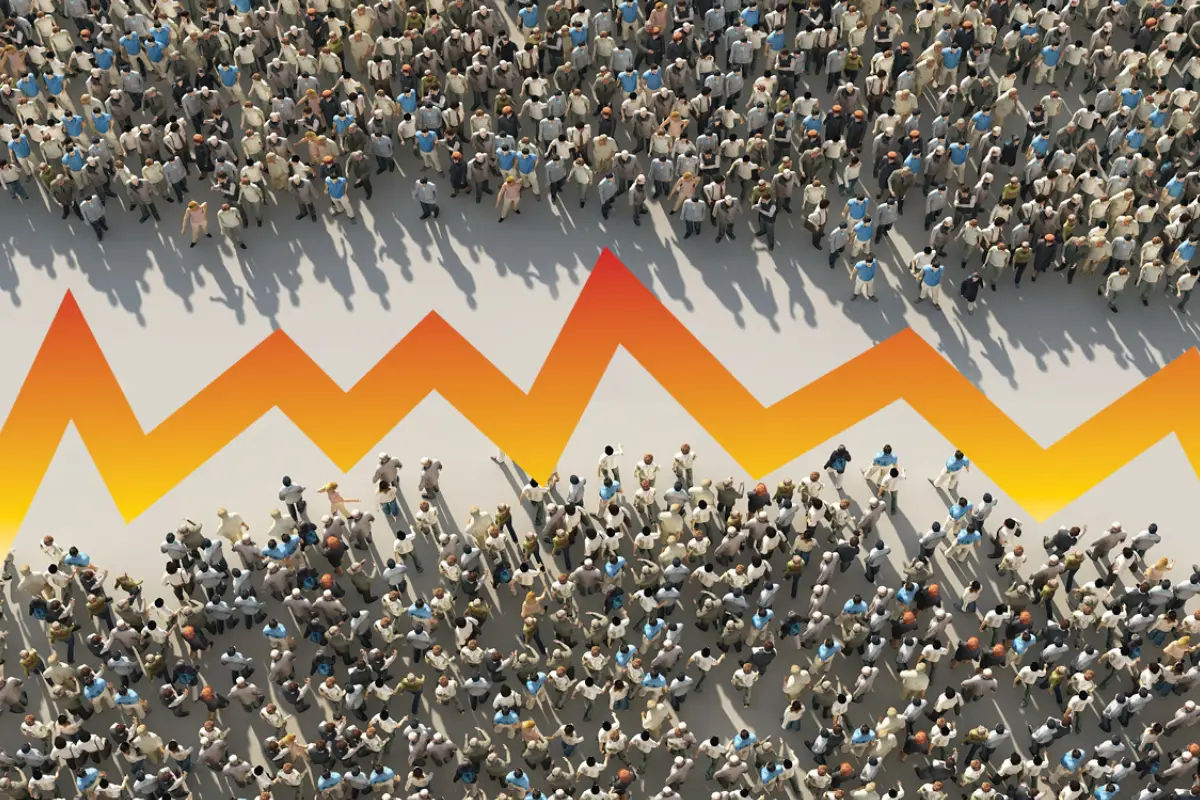
The fragmentation also hollows out the professional class of mediators. The legacy press, the fact-checking institutions, the academic departments that once served as slow, clunky arbiters of consensus have been stripped of their gatekeeping power. In a fragmented world, every fact is contested by a counter-institution that looks and sounds legitimate to its audience. A voter can instantly find a doctor or a scientist with impeccable credentials who will confirm whatever political bias their team requires. This is not simply the denial of expertise; it is the privatisation of expertise, turning knowledge from a public good into a weapon for private political consumption.
Advertisement
The psychological effect on the individual voter is a state of chronic cognitive dissonance and exhaustion. Navigating a society where half the population believes in a completely inverted sequence of events requires a constant, energy-draining process of translation. Shared rituals and cultural references—the front page everyone saw, the prime-time address everyone watched—disappear. What remains is a fractured population lacking the common narrative required to identify, mourn, and solve a collective crisis. When a pandemic or a natural disaster strikes, the country does not unify; it simply fragments further along the pre-existing fault lines, fighting over the nature of the fire while the house burns.
Reversing fragmentation cannot be achieved by a return to a mythical, monolithic media past. Instead, the path forward lies in redesigning the spaces between the fragments. It requires fostering a civic culture that values the ‘process’ of disagreement over the outcome of victory. This involves deliberate exposure to the other’s media diet, not to be converted, but to understand the internal logic of the other tribe’s fear. Voting systems that incentivise coalition and consensus over winner-take-all, and a renewed emphasis on local, physical civic engagement where the abstract enemy is replaced by a neighbour, offer a faint glimmer of a glue that might hold the shattered pieces together.